
The gap between an amateur mix and a pro one comes down to better decisions, not better gear.
6 Pro Mixing Habits That Make Any Track Sound Professional

You've watched the tutorials. You bought the plugins. You copied the settings exactly. And your mix still sounds... off. Here's the part nobody likes to admit. The problem usually isn't your gear. It's the order of your choices.
A pro and a beginner can own the very same tools. The pro just makes smarter calls, and they make them in the right sequence. That's it. That's the whole game.
Let's break down how they actually think.
What a Pro Mix Sounds Like
Before we fix anything, we need a target. What are we even aiming for? A pro mix tends to share a few traits:
- Balanced. Nothing is too loud or too quiet by accident.
- Clear. Every instrument has room to breathe.
- Punchy. It moves. It hits. It isn't flat and squashed.
- Deep. Some sounds feel close; others feel far away.
- Reliable. It sounds good everywhere, not just in your room.
Keep that list in mind. Everything below is simply a way to reach it.
How to Achieve a Pro Mix
Get Your Levels Right First
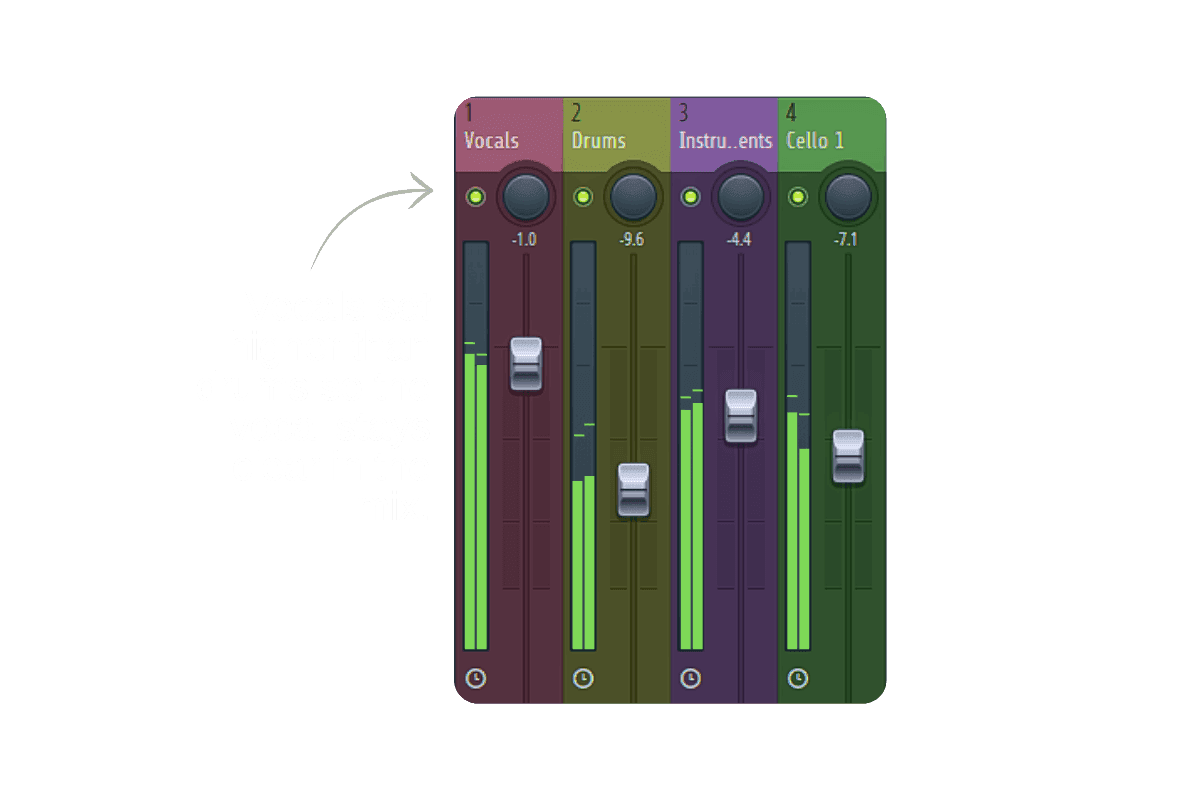
Most people rush straight to plugins. Big mistake.
Start with your faders. Just the volume sliders, nothing fancy. Pull everything down, then bring each part up until the song feels balanced. What should lead? What should sit back? Decide that first.
Next comes automation. That just means changing volume over time. A quiet word in a verse can be nudged up. A loud line in the chorus can be eased down. You do this by hand, before any clever tools.
Only then should you reach for a compressor. A compressor evens out the loud and soft parts for you. It's handy. But it works best after you've done the simple stuff. For example, sometimes one drum hit jumps out way too loud. Catch those spikes so nothing startles the listener.
Get the balance right, and your mix is half finished before you touch a single effect.
Stop Mixing in Solo
Soloing a track is a normal part of mixing. You isolate one part. You shape it. You get it sounding good on its own. That's a useful step, and there's nothing wrong with it.
But here's the catch. Songs aren't played one track at a time.
A guitar can sound amazing alone and still feel wrong in the full mix. A vocal can seem dull by itself, yet sit perfectly with everything else around it.
So do both. Polish the track in solo if you like. Then unsolo it and ask one simple question. Does it work in the song? Both checks matter just as much.
Reference Against Real Releases
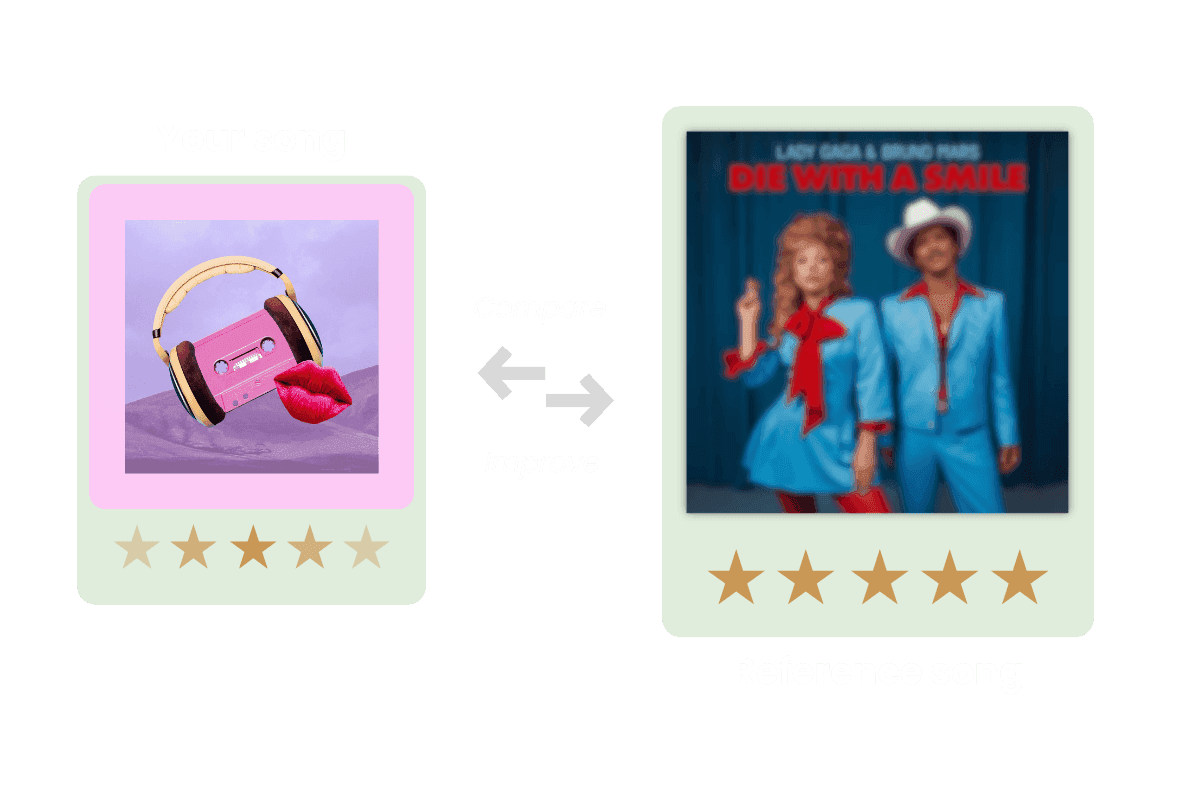
Want to improve fast? Compare your mix to a song you love.
Pick a professional track in your style. Play it. Then play yours. Switch back and forth a few times. You'll hear things almost instantly:
You'll hear things almost instantly:
- Is your bass too weak, or too boomy?
- Are your highs harsh and painful?
- Is your mix too quiet, or too crowded?
Your ears lie when they work alone. A reference track keeps them honest. Most pros do this all the time. Beginners barely do it at all.
Let the Arrangement Do the Work
Sometimes a mix sounds muddy no matter what you try. You add EQ. You cut frequencies. Nothing seems to help.
The real fix often isn't mixing at all. It's the arrangement.
If five instruments all play in the same range, they fight. They smear together into mud. No plugin fully cleans that up.
The answer is space. Let the kick and bass take turns down low. Thin out busy sections. Give each sound its own little pocket to live in.
A cluttered song is a writing problem, not a mixing problem.
Give Your Mix Depth
A flat mix feels like a wall of sound. Everything sits right in your face. It gets tiring fast.
Pro mixes have depth. Some sounds feel near. Others feel far away. It's a bit like standing in a real room.
How do you do it? Reverb and delay. Reverb adds the sense of a space, like a hall or a small studio. Delay creates echoes that push a sound further back.
Use a touch on some parts. Leave others dry and up front. That contrast is what gives your mix a real sense of three dimensions.
Check How It Translates
Your mix sounds great on your headphones. But will it survive the real world?
People listen everywhere. In cars. On cheap earbuds. Through tinny phone speakers. On a laptop at work.
So test it on all of them. Bounce your mix down. Then play it on as many devices as you can find. Note what breaks.
If the bass vanishes on phone speakers, you've got work to do. If the vocal disappears in the car, fix it. A pro mix holds up no matter where it plays.
Common Beginner Mistakes
Most early problems come down to a handful of habits. Here are the big ones and what to do instead.
| The Mistake | The Pro Fix |
|---|---|
| Reaching for plugins first | Balance your faders first |
| Mixing every track in solo | Judge sounds in the full mix |
| Crushing everything with compression | Use a little, keep the punch |
| Never comparing to other songs | Reference real releases often |
| Cramming in too many parts | Leave space in the arrangement |
Notice something? None of these need money to fix. They just need a change in habit.
What Really Sets Pros Apart
Here's the part nobody talks about. The biggest difference isn't technical. It's how pros think and listen.
They rest their ears.
Listen for hours and your ears grow tired. Tired ears make bad calls. Pros take breaks. Fresh ears catch what tired ears miss.
They commit and move on.
Beginners stare at meters and moving graphs. Pros close their eyes and just listen. The screen can fool you. Your ears won't.
They stay honest about their own songs.
This one is the hardest. When it's your music, you hear what you meant to make, not what's really there. Pros find ways to step back and listen like a stranger would.
They train their ears, not their eyes.
Beginners stare at meters and moving graphs. Pros close their eyes and just listen. The screen can fool you. Your ears won't.
There's no secret plugin. There's no magic preset.
A pro mix is just hundreds of small, smart choices stacked on top of each other.
Where Mastering Begins
Your mix is done and bounced to one stereo file. But a finished mix isn't always a ready one. It still has to hold up across phones, laptops, and car stereos. And next to a loud commercial song, even a good mix can sound thin.
A perfect mix isn't the finish line. It's the setup. Mixing shapes the parts. Mastering polishes the whole song as one piece, so it holds its ground anywhere it plays and stands tall next to commercial releases.
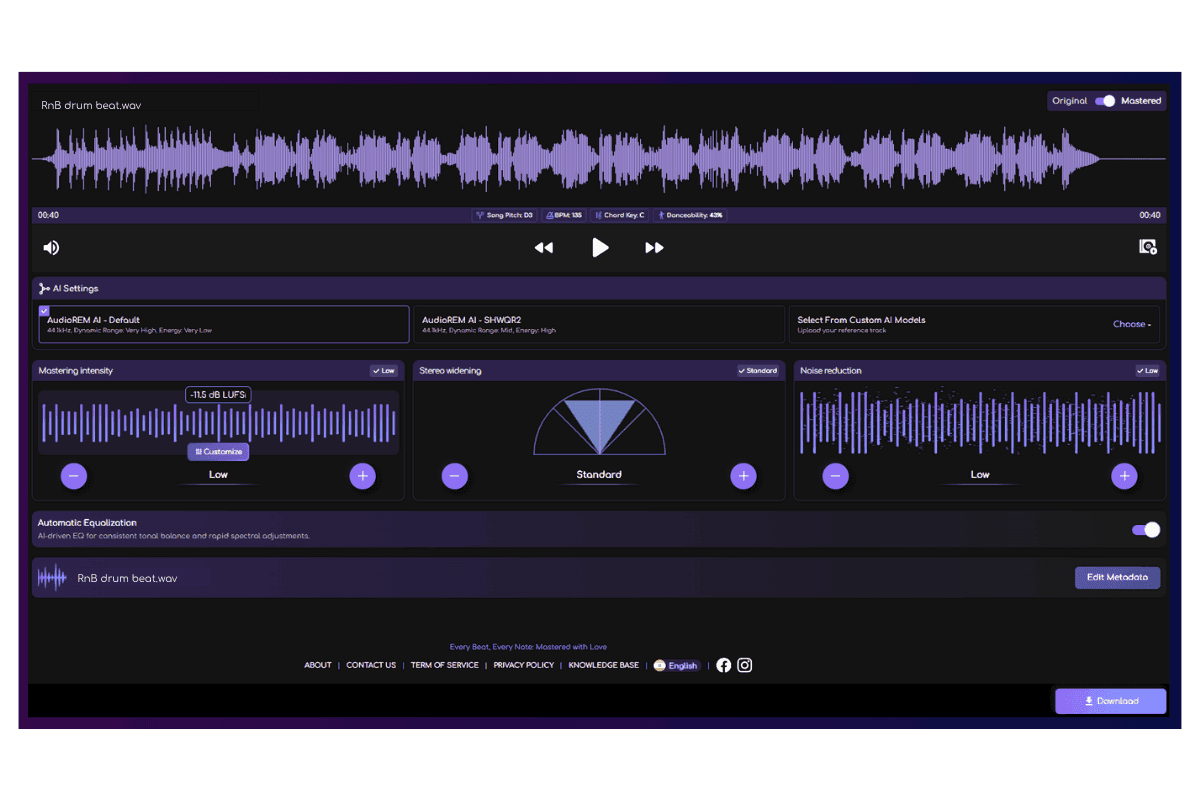
Remasterify makes this simple. You upload your finished stereo mix. Its AI studies your song's character and masters it to fit that exact track, and it takes less than a minute. The result comes back polished and loud enough to stand strong next to the biggest commercial releases, instead of sounding small beside them.
Want more control? Advanced settings let you adjust any of it yourself. Want it done for you? Leave them alone and let Remasterify make the call.
One last thing. Remasterify doesn't mix. It won't fix a muddy arrangement or rebalance your vocal. That's your job, done before this stage. It just takes your good mix and gives it a release-ready finish.
Frequently Asked Questions
Do I need expensive gear to get a pro mix?
No. Good decisions beat expensive plugins every time. Most pro habits cost nothing. You can start using them today with the tools you already own.
What's the difference between mixing and mastering?
Mixing shapes the separate parts of a song, like each vocal and each drum. Mastering polishes the whole finished mix as one piece. Mixing comes first. Mastering comes last.
Can I make a professional mix entirely on a computer?
Yes. Plenty of commercial hits are made fully "in the box." No hardware needed. What matters is your decisions, not your gear.
Why does my mix sound good at home but bad in the car?
That's a translation problem. Your room or your headphones may be hiding issues. Test your mix on phones, earbuds, and car speakers to catch them early.
Does Remasterify mix my song for me?
No. Remasterify works only at the mastering stage. It polishes your finished stereo mix. The mixing part — balancing your tracks and shaping each sound — is done before you bring it in.