
Modern vocals stay clear, present, and emotionally connected. Understanding compression is a big part of why.
Vocal Compression: How to Get Commercial-Sounding Vocals at Home

If your vocals never quite match the polish of the records you stream every day, you are not alone. Most home producers spend hours tweaking a single compressor, only to end up with a vocal that still feels uneven, dull, or weirdly harsh. The frustrating truth is that vocal compression in modern production is rarely about finding one perfect plugin setting. It is about understanding what compression actually does, how the pros stack it, and where automation fits into the picture.
This guide breaks down the essentials and the techniques that separate amateur mixes from professional ones, without the jargon overload.
What Is Vocal Compression? Why Even Compress Vocals?
Vocal compression is a process that narrows the gap between the loudest and quietest parts of a vocal performance. When a singer hits a powerful note, the compressor turns it down. When they pull back to a softer phrase, that quieter delivery sits closer to the loud parts in volume. The result is a vocal that stays present and intelligible from the first word to the last.
Without compression, listeners often have to reach for the volume knob mid-song. With it, every syllable lands with the right weight, and the vocal sits naturally on top of the instruments instead of disappearing behind them. Modern pop vocals are among the most highly compressed elements in a mix, and that is no accident. Consistency is what allows vocals to feel upfront, emotional, and ready for streaming platforms.
The Settings That Actually Shape the Sound
Every compressor has a handful of controls that work together to shape the final sound. Understanding what each one does is the difference between guessing and mixing with intention.
Threshold
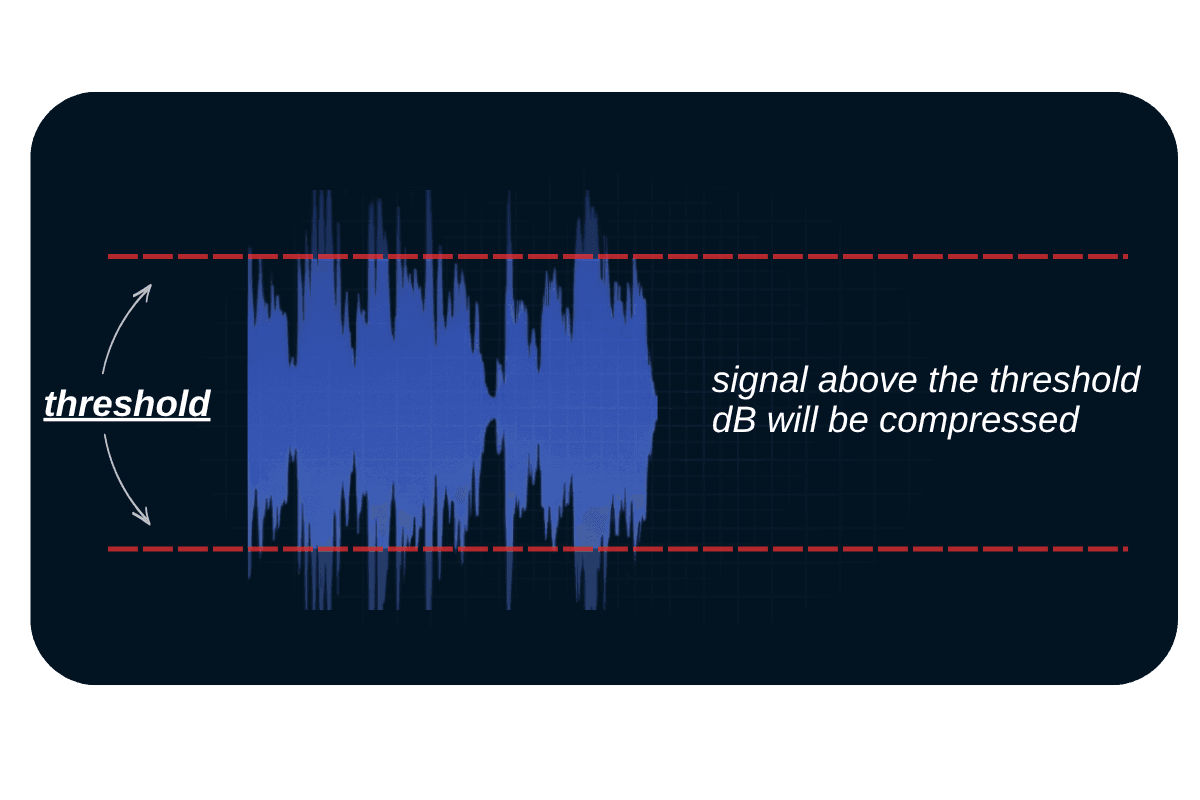
Threshold sets the volume level at which the compressor starts working. Anything louder than the threshold gets reduced, while anything quieter passes through untouched.
A good starting point is to lower the threshold gradually until the compressor is only catching the loudest words and phrases.
Ratio
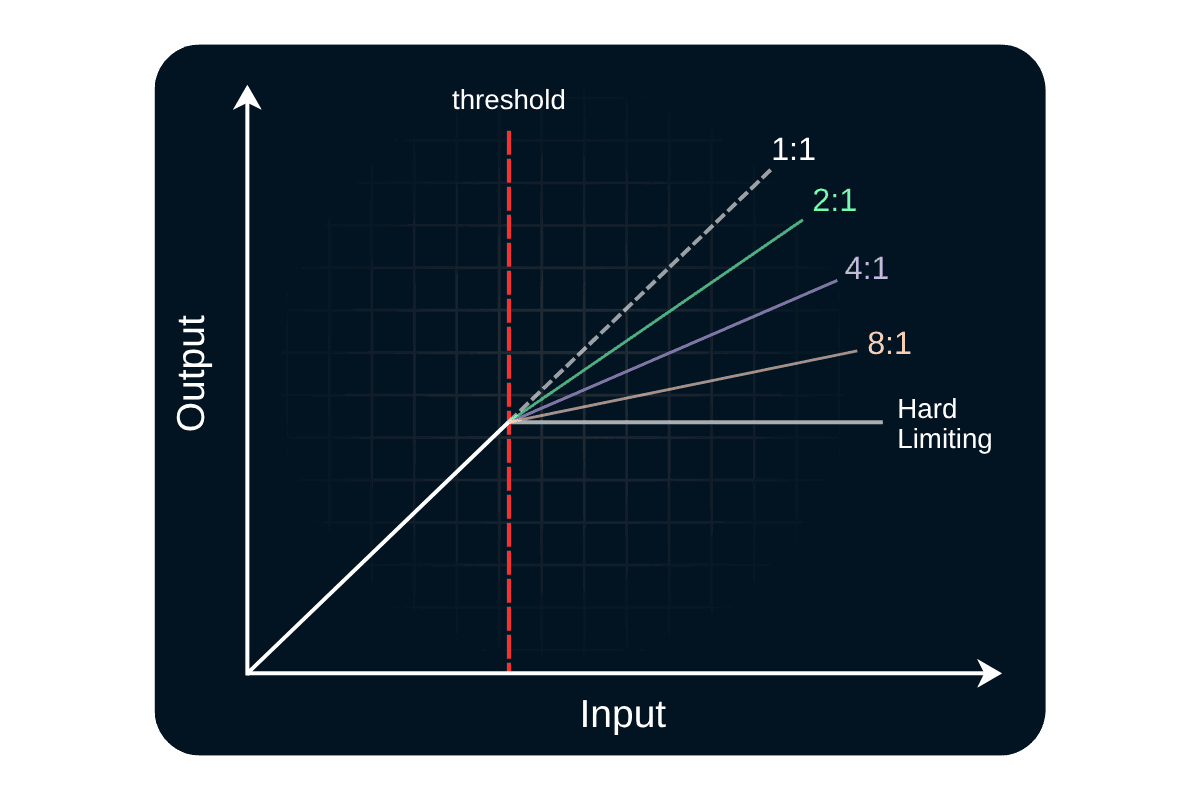
Ratio decides how much the compressor reduces the signal once it crosses the threshold. A 2:1 ratio is gentle and transparent, which works well for natural-sounding vocals. A 4:1 ratio is the standard middle ground for most pop and rock vocals.
Attack
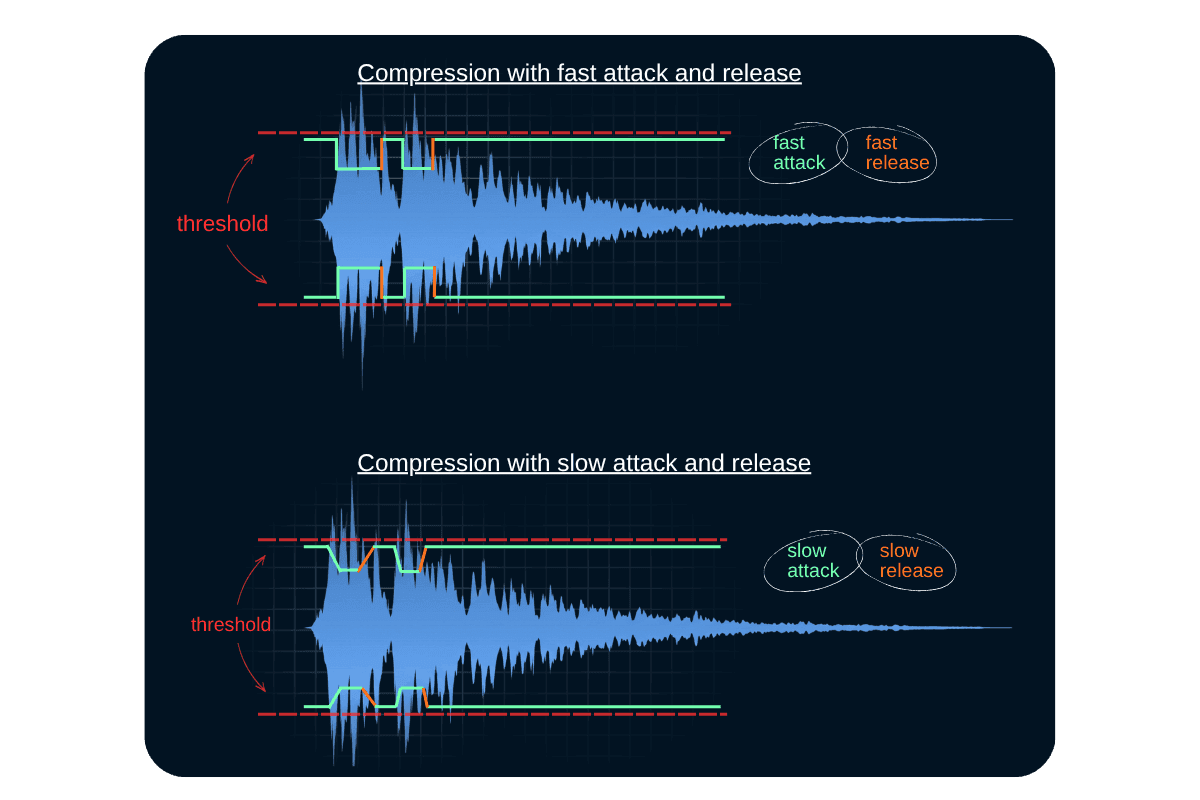
Attack controls how quickly the compressor reacts. A faster attack tames sharp consonants and peaks, which can smooth a vocal but also flatten its energy. A slower attack lets the punch of each word through before the compressor clamps down, which keeps the performance lively.
Release
Release controls how quickly the compressor lets go. A faster release keeps the vocal upfront and dense, but it can sound choppy when pushed too far. A slower release feels smoother but can dull the vocal or create a pumping effect.
Knee
Knee is often overlooked. A soft knee eases the compressor in gradually as the vocal approaches the threshold, which sounds more natural on voices than the abrupt clamp of a hard knee. For lead vocals, a soft knee is usually a safer starting point.
Makeup Gain
Makeup Gain brings the vocal back up after compression has turned it down. Since the compressor reduces the loudest parts of the signal, the overall level drops, and the vocal can suddenly feel smaller than the other elements in the mix.
The goal is to match the input and output levels so you can hear what the compressor is actually doing to the tone and dynamics, not just how much quieter it has made everything.
If a compressor sounds wrong on your vocal, change attack and release before you touch the ratio. That single habit fixes more problems than most beginners notice.
How Much Compression Is "Right"?
This is the question every home producer asks, and the honest answer is that there is no single number. Some vocals sound great with five decibels of total gain reduction. Others receive twenty or more across multiple stages and still sound natural.
The right amount depends on the singer, the genre, the recording quality, and how dense the arrangement is. Pop, rap, and modern rock vocals tend to be compressed heavily so every word cuts through. Acoustic, jazz, and singer-songwriter styles usually use a lighter touch so the natural dynamics of the performance can breathe.
Stop staring at the gain reduction meter and start listening. If the vocal feels controlled and musical in the mix, the compression is working. If it feels squashed, lifeless, or strangely loud on the quiet parts, you have probably gone too far.
Advanced Techniques
Once you understand the basics, these three techniques are what take a home-mixed vocal from decent to professional.
Fix the Performance Before You Fix the Compressor
Compressors are great at smoothing out small dynamic variation, but they struggle when a vocal swings wildly in volume from line to line. The fix is older than any plugin. Manually level the vocal first, using clip gain or volume automation, before reaching for a compressor at all.
This is not just a beginner tip. When NoiseWorks surveyed a group of professional mix engineers, including Grammy winners, engineers behind number-one records, and people who have worked with some of the biggest names in the music business, the answers about clip gain were almost unanimous. Nearly all of them do it, and most do it extensively. The reason is simple. When the vocal already sits at a steady level, your compressors can focus on adding character and glue instead of fighting the performance.
A good rule of thumb is to get your vocal roughly ninety percent of the way there with automation, and leave the final touch to your compressor.
Parallel Compression
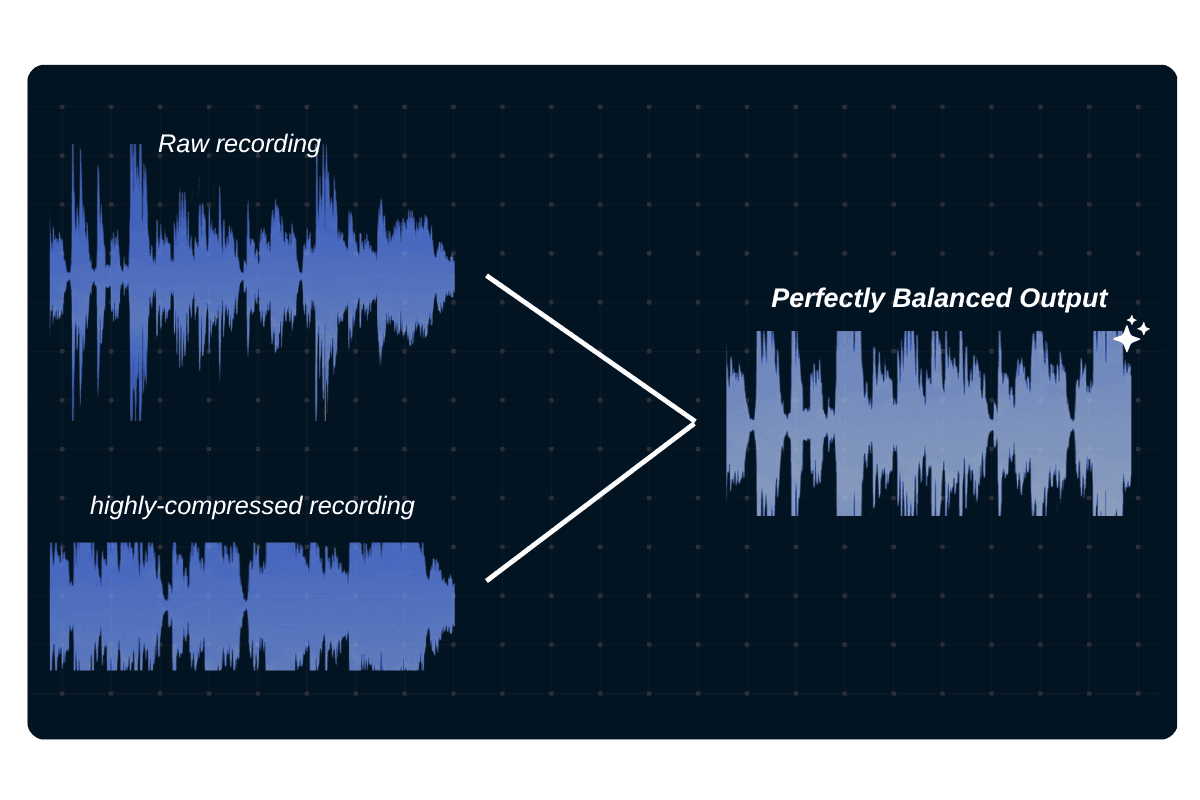
Parallel compression involves duplicating your vocal, compressing the copy heavily, and blending it underneath the original. The original keeps its natural dynamics and transient detail, while the smashed copy adds density, sustain, and that upfront feeling associated with commercial records.
A common starting point is to crush the duplicate with a ratio around 10:1 and roughly ten decibels of gain reduction, then bring the fader up slowly until the vocal feels fuller without losing its character. The trick is to treat the parallel layer as a seasoning, not a main ingredient.
Serial Compression: The Real Secret Behind Modern Vocals
If there is one technique that explains why commercial vocals sound so different from home mixes, this is it. Serial compression means using two compressors in a row, each doing a moderate amount of work, instead of asking one compressor to handle everything.
The first compressor handles peaks. Set it with a fast attack, a fast release, and a higher ratio of around 8:1 or 10:1, aiming for just two to three decibels of gain reduction on the loudest words. Its only job is to catch transients before they get out of hand.
The second compressor handles overall leveling. Use a slower attack, a slower release, and a gentler ratio between 2:1 and 4:1. This compressor smooths the body of the vocal, glues it together, and adds character. Aim for another three to five decibels of gain reduction here.
The combined effect is a vocal that feels controlled and present without sounding squashed. Two compressors doing moderate work almost always sound more natural on a voice than one compressor doing heavy lifting.
Here's Another Way
Building a multi-stage vocal chain takes time, ear training, and a fair amount of trial and error. For producers, podcasters, and indie artists who would rather focus on writing and performing, there is a simpler path that still delivers polished results.
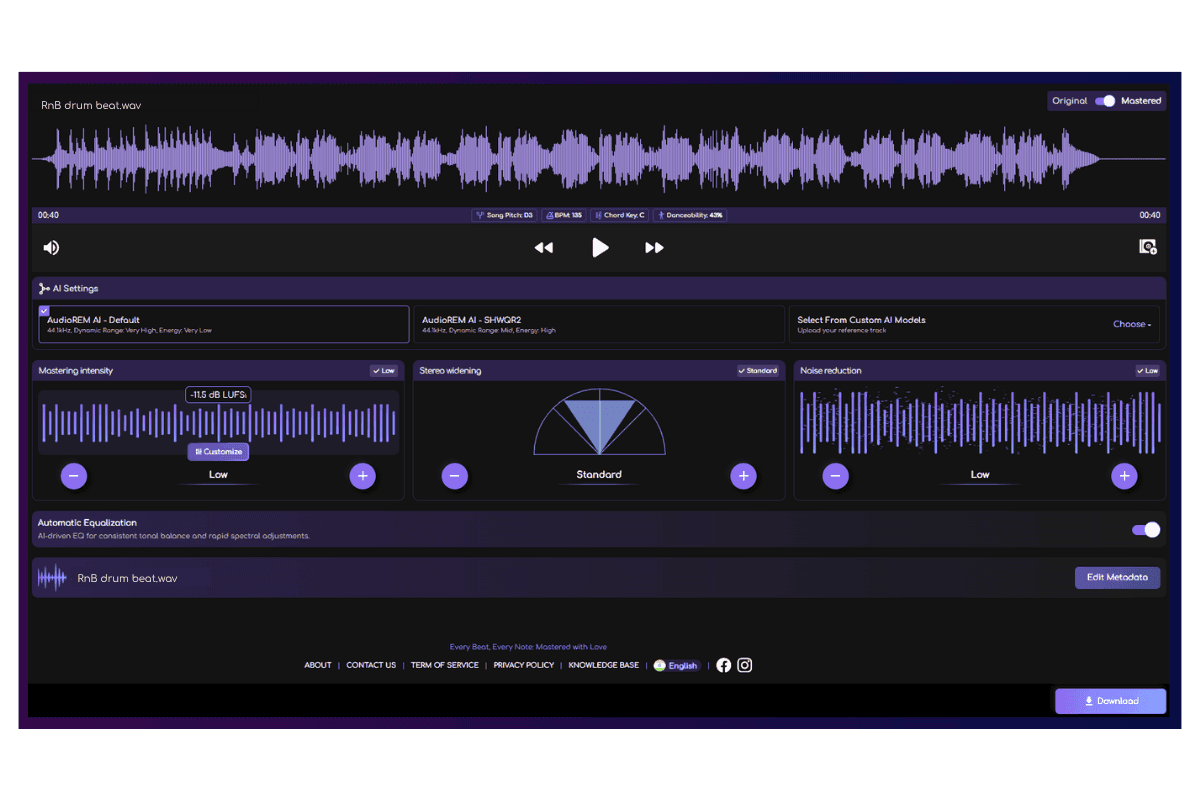
Remasterify is an AI-powered tool that handles the dynamic work for you. You upload your vocal recording in MP3, WAV, or MP4 format, and the engine analyses the material to apply the right amount of compression, EQ shaping, and loudness control for the genre. There is an intensity slider so you can choose how heavy the processing feels, which is useful when you want a folk vocal to stay intimate or a pop vocal to push harder. You can also upload a reference track to guide the engine toward a specific sound you have in mind.
It will not replace a seasoned engineer for every project, but for the moments when you have a strong performance and just need it to sit properly in the mix, it gets you there in minutes rather than hours. Pair it with clean recordings and a tidy mix, and the results often hold up alongside tracks that took entire afternoons to compress by hand.
Whether you build your own chain or hand the technical side over to a tool like Remasterify, the goal is the same. A vocal that feels controlled, present, and human from the first word to the last is what turns a home recording into something worth releasing.
Frequently Asked Questions
What are the best compression settings for vocals?
A common starting point is a 3:1 or 4:1 ratio, a medium attack of around 10 to 30 milliseconds, a release between 40 and 100 milliseconds, and a threshold set to catch around 3 to 5 decibels of gain reduction on the loudest words. Adjust from there based on the singer and the song, since no single setting works for every vocal.
Should I compress vocals before or after EQ?
Use corrective EQ first to remove low-end rumble, mud, and any harsh resonances, then apply compression, and finally use tonal EQ to shape the character. Feeding a cleaner signal into the compressor stops it from reacting to frequencies you were going to cut anyway.
How to EQ and compress vocals?
Start by cleaning up the vocal with a high-pass filter and gentle cuts to any muddy or harsh frequencies. Then compress in stages, using a peak compressor first and a leveling compressor second. Finish with tonal EQ to add air, presence, or warmth depending on the style.
Why does my vocal sound harsh or sibilant after compression?
Compression raises the volume of quieter sounds, including S and T consonants, which can push them above a comfortable level. Place a de-esser after your compressor to tame the harsh frequencies without losing the density compression gives you.
Can I use one compressor instead of serial compression?
Yes, one compressor works fine for many situations, especially when the performance is already consistent. Serial compression simply sounds smoother because each stage does less work, which is why it has become a standard approach in modern vocal mixing.