
A vocal booth can genuinely improve your recordings. But whether you own one, want one, or have never considered one, there's a broader conversation worth having about what actually makes vocals sound polished and release-ready.
Vocal Booth or No Vocal Booth? Here's the Honest Answer
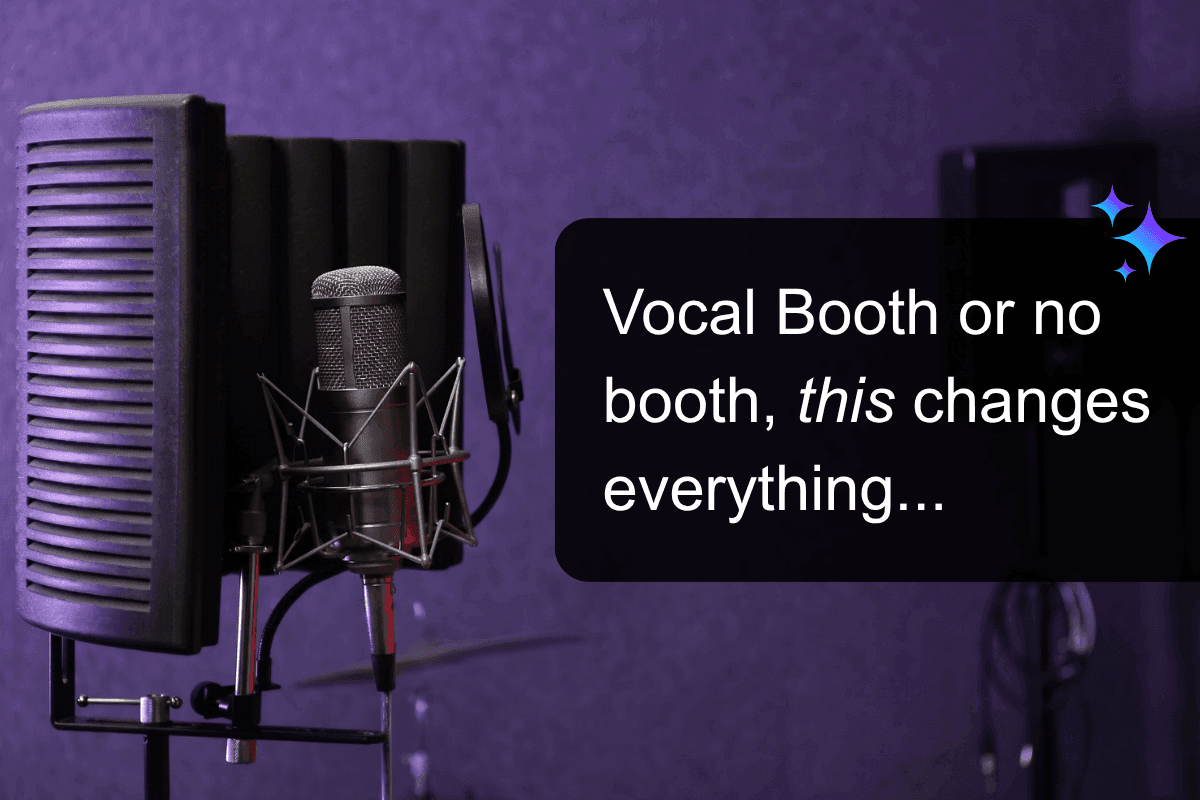
Walk into almost any professional recording studio, and you'll find a vocal booth — a compact, treated space where the singer performs in isolation from the surrounding room. It's become iconic. So, it's no surprise that home recording artists look at those setups and think: I need one of those.
That instinct isn't wrong. But it does deserve a closer look. A vocal booth is a tool, and like any tool, how much value it gives you depends heavily on your situation — where you record, what problems you're actually dealing with, and how you handle the audio once the session is over.
What a Vocal Booth Is Actually Designed to Do
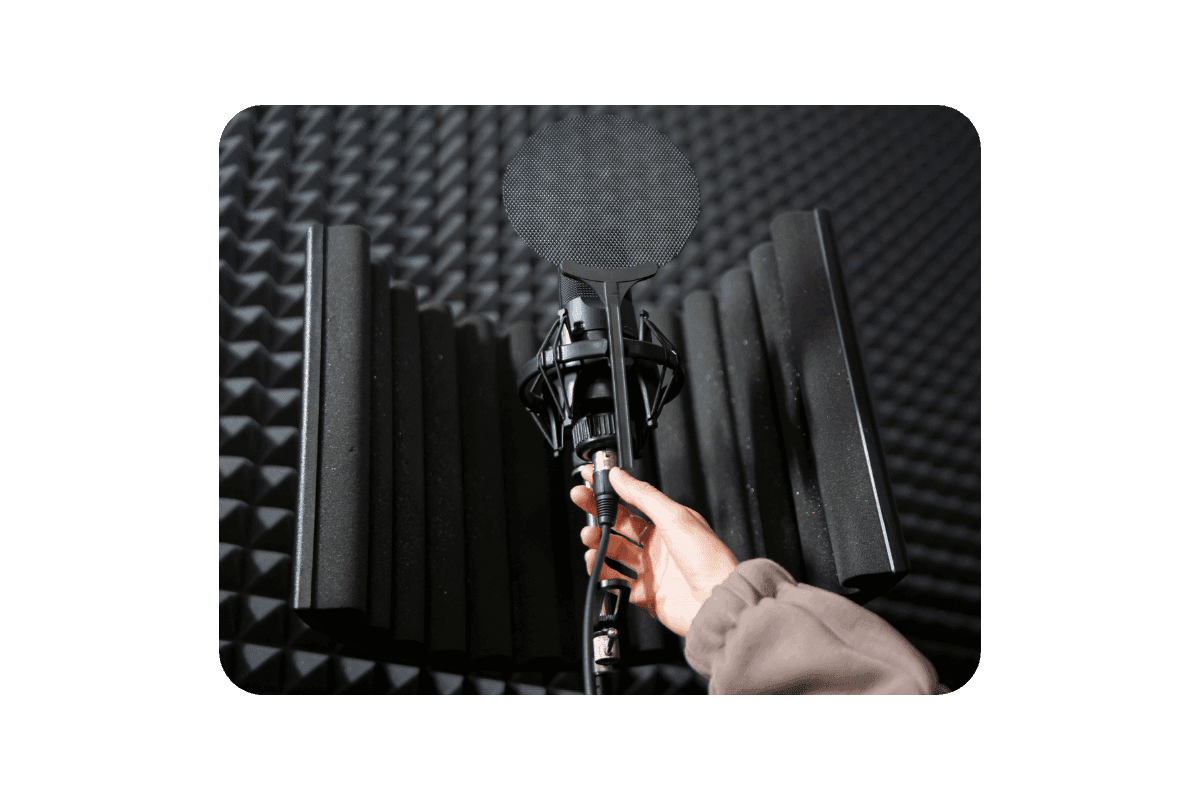
A vocal booth solves two separate problems, and it's worth keeping them distinct.
- The first is sound isolation, physically blocking outside noise from entering your recording. Traffic, building ventilation, neighbors — a properly built booth creates a meaningful barrier between those sounds and your microphone.
- The second is acoustic control, managing how sound behaves inside the space, so you don't capture unwanted echo or room reflections alongside your voice.
Both are real challenges in home studios. And a booth does address them. The question is really about fit: does your specific situation call for it, and if so, what kind?
What Shapes the Results Inside a Vocal Booth
A booth sets the conditions for a clean recording, but it doesn't work in isolation from the decisions you make around it. Several variables determine how well a booth actually performs in practice, and knowing them upfront saves a lot of frustration later.
- Wall treatment thickness — Thin foam only catches the brighter sounds (higher frequencies). The warmer tones (usually the lower frequencies,) in your voice need thicker padding to stop them muddying the recording.
- Room dimensions — A very small booth can vibrate at a similar pitch to your voice, adding a muddiness that's hard to hear in the moment but shows up clearly in the mix.
- Ventilation — Any fan or air vent creates a low-level background hum that a good microphone will pick up. Where you place it matters more than most people expect.
- Microphone and vocalist position — In a tight space, even small shifts in where you stand or angle the mic can change how your voice sounds. Keeping your position consistent every session matters.
Think of the booth as the foundation. These variables are the architecture built on top of it. Get them right, and a booth gives you exactly what it promises — a controlled, repeatable recording environment that makes every subsequent step easier.
A Booth Helps, But It Doesn't Do It All
A booth controls the room, but not everything that lands in a recording. Background noise, floor vibrations, and HVAC hum can still creep in. And no booth prevents what happens right at the mic: plosives from hard consonants, mouth clicks, breath rushes, the occasional pop that a windscreen only partially catches.
There's also a subtler issue: an improperly treated or undersized booth can make vocals sound worse than a well-furnished open room would. Too much absorption, not enough diffusion, and the voice loses its natural air, landing in what engineers call a "dead" or "boxy" sound that's hard to fix in the mix.
And if you don't have one? You're not missing out as much as you might think. A bedroom with carpet, heavy curtains, and a wardrobe of clothes is a naturally dampening space. A reflection filter behind the mic handles early reflections. Post-production handles the rest and today, post-production tools are powerful enough that the gap in room sound and tonal quality between a treated room and a sealed booth is smaller than it's ever been.
Even major artists know this. Take this footage of Justin Bieber recording in what's clearly an informal space with curtains around and no sealed booth in sight. It's a reminder that in many cases, the environment doesn't have to be perfect if the rest of the process is handled well.
Justin Bieber recording in an informal space, no sealed booth in sight.
The Tools That Are Closing the Gap
AI-driven audio tools now address what a booth can't.
One of the strongest tools available right now is Remasterify . It can detect and remove common distractions like AC hum, static noise, and plosives without meaningfully affecting the natural character of the vocal. For many creators, that can reduce the need for a vocal booth in the first place.
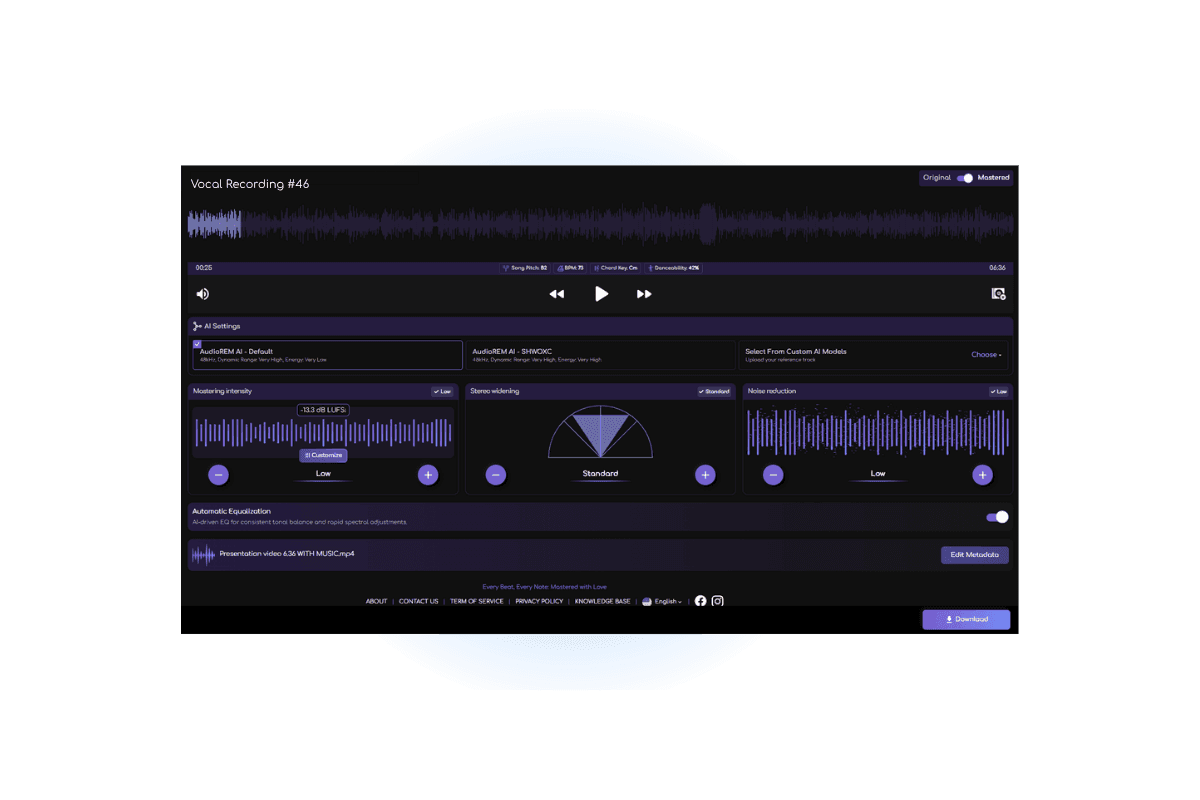
It goes a step further by enhancing the overall quality of the recording. It tightens the sound and brings it closer to what you'd expect from a professionally treated space. Instead of spending extra time fixing rough recordings manually, creators can move forward with audio that already feels more refined.
What that means practically is that the decisions you make in post-production now carry more weight than they used to. A vocal recorded in a treated bedroom, run through the right tools, can sit in a mix right alongside one cut in a sealed booth. And in many cases, the difference is negligible. The booth controls what enters the microphone. The tools control what makes it to the final file. Both matter, but for a long time, only one of them was accessible to artists working outside a professional studio. That's changed.
Where This Leaves You
A vocal booth is a meaningful investment if your recording environment genuinely calls for it and there are excellent options at every level, from portable reflection filters to professional freestanding rooms. Used well and treated properly, a booth gives you consistent, controlled recordings that are easier to work with from the start.
If you don’t have one, you have real alternatives. Modern post-processing tools like Remasterify, acoustic treatment, and smart mic placement can all bring a home recording to a competitive standard.
Frequently Asked Questions
What’s the biggest mistake people make when improving vocal quality?F
Focusing only on recording gear. In most cases, positioning, environment, and post-processing have a bigger impact than upgrading equipment.
Does a better microphone reduce the need for a vocal booth?
Not necessarily. High-quality microphones are often more sensitive, which means they can capture more room noise, reflections, and small imperfections. That is why a better recording conditions or thoughtful post-processing afterward helps.
What can you use instead of a vocal booth?
Soft furnishings like carpets, curtains, and wardrobes help absorb reflections. A reflection filter behind the mic can further reduce room sound. From there, post-processing tools like Remasterify clean up remaining noise and refine the vocals.
Do blankets work as vocal booths?
Blankets can help, but only to a point. They reduce some reflections and high-frequency noise, making recordings sound less echoey. However, they don’t provide true isolation and won’t block outside noise.
You’ve Got the Take. Now Finish It Right.
Try Now for Free