
One small switch decides whether you capture a clean, detailed take or end up staring at flat, silent meters. The good news is that the concept behind it is simpler than most people expect.
What Is Phantom Power? A Simple Guide for Beginners
You connect a quality microphone, arm the track, and get nothing back. The cable checks out and the mic looks healthy, but the meters stay flat. In most cases, the culprit is phantom power. It sounds like studio folklore, but the concept is simple. Certain microphones just won't pass a signal without it.
This guide breaks down what phantom power is, which mics rely on it, how it actually works, and the myths worth dropping.
What Is Phantom Power?
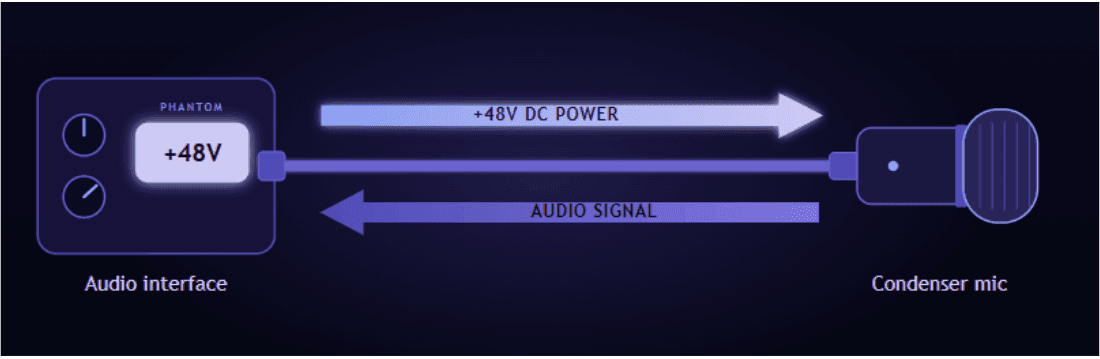
Phantom power is a steady supply of DC electricity sent to your microphone. It travels through the same cable that carries your sound. Most gear sends 48 volts, often labeled "+48V" or "P48."
Some microphones contain active electronics that need power to work. Phantom power delivers that electricity quietly through the same audio cable, so the mic can capture your sound.
It's called "phantom" because there's no separate power supply to see. One cable does two jobs at once. It powers the mic and carries the audio back to your recorder.
You turn it on with a simple button or switch. Look for "+48V" on your audio interface, mixer, or mic preamp. One press, and the power flows.
When Do You Need It?
You need phantom power when you use a condenser microphone. These mics have tiny electronics inside that only work with power. You don't need it for most dynamic mics, like a Shure SM57 or SM58. Those mics make their own signal and run fine on their own.
Here's a quick cheat sheet:
| Microphone type | Needs phantom power? |
|---|---|
| Condenser mic | Yes, almost always |
| Dynamic mic | No |
| Active ribbon mic | Yes |
| Passive ribbon mic | No, and never force it on |
Not sure what you've got? Check your mic's manual. It will tell you exactly what your mic needs.
Why Do Some Microphones Need Phantom Power?
To understand this, let's peek inside the mic. Different microphones capture sound in very different ways.
- A dynamic microphone works like a tiny generator. Sound waves move a small coil near a magnet. That movement alone creates the signal, so no power is needed.
- A condenser microphone is built differently. It uses a thin, charged plate that vibrates with sound. That plate and its built-in circuit need electricity to do anything.
Without power, a condenser mic stays asleep. The plate can't hold its charge, and the tiny built-in amp can't run. So, you get total silence.
How Does Phantom Power Work?
Follow the power from start to finish. The trip is short and pretty clever.
- You press the "+48V" button on your audio interface, mixer, or preamp.
- The device sends 48 volts down the microphone cable.
- The power rides along the same wires that carry your audio.
- Your condenser mic receives the power and switches on.
- The mic sends a clean audio signal back through that same cable.
Here's the clever part. Phantom power requires a balanced cable, such as a standard 3-pin XLR. The power is equally split between the two signal wires.
A dynamic mic sees the same voltage on both wires, so it cancels out. The mic feels nothing. That's why phantom power doesn't bother most dynamic mics at all.
This balanced design lets one cable safely carry both power and sound. It's a neat trick, and it has been the studio standard for decades.
Common Phantom Power Myths
Plenty of bad advice floats around about phantom power. Let's clear up the most common myths.
Myth 1: Phantom power will fry any dynamic mic.
Not true. Standard dynamic mics, like the SM58, are safe. The balanced cable design protects them, so +48V won't hurt them.
Myth 2: More voltage makes your mic louder.
Nope. The 48 volts only power the electronics. It doesn't boost volume or improve the sound. Your mic is built for that exact amount.
Myth 3: Phantom power adds hiss and hum.
Usually false. Clean, working phantom power is silent. If you hear noise, the cause is often a bad cable, a ground issue, or cheap gear.
From Mix to Master
Recording and mixing get your song sounding good in your studio. Mastering is what makes it sound right everywhere else, from phone speakers to car systems to club PAs.

Remasterify handles that final step for you. It uses genre-aware AI to analyze your finished mix, then balances the loudness, shapes the tone with EQ, and adjusts the stereo width so the track feels full and consistent. It can also clean up light background noise and bring your song to the right loudness for streaming.
The result is a release-ready master set up for Spotify, Apple Music, and other platforms. You can let the AI do the work, or use the manual controls to fine-tune the sound yourself.
Final Thoughts
Phantom power isn't scary once you understand it. Condenser mics need it; most dynamic mics don't, so use a balanced XLR cable and switch the power off before swapping mics. Get this right, and you'll capture clean recordings, which makes mixing easier and sets up a strong final track. Once your mix is done, the last step is mastering. If you want a pro finish without the steep learning curve, Remasterify can master your track and get it ready for Spotify, Apple Music, and more.
Frequently Asked Questions
What is meant by phantom power?
Phantom power is DC electricity your gear sends down the mic cable to power certain microphones. It runs through the same cable that carries your audio, usually at 48 volts.
Why do I need phantom power for a mic?
Condenser mics have active electronics inside that can't work without power. Phantom power supplies that electricity so the mic can capture sound. Most dynamic mics don't need it.
Is phantom power a real thing?
Yes. It's a standard feature on most audio interfaces, mixers, and preamps, marked "+48V" or "P48." It has been the studio standard for decades.
What power does the Phantom have?
Phantom power usually supplies 48 volts of DC, labeled "+48V" or "P48." Some gear offers 12 or 24 volts, but 48 is the common standard.
Can I use phantom power without an XLR cable?
No. Phantom power needs a balanced connection like a standard XLR. It won't travel through a basic unbalanced cable.