
Making music has never been more accessible. The challenge isn't getting started; it's knowing where to focus your time and energy.
Music Production for Beginners: How to Start Making Music Without Getting Overwhelmed
With a computer, a pair of headphones, and the right software, anyone can start producing music from home. Yet many beginners still feel overwhelmed when they encounter terms like DAWs, plugins, EQ, mixing, and mastering.
The truth is that you don't need to learn everything at once.
Music production is a skill that develops over time, and most successful producers started with simple tools and basic projects. The key is knowing where to focus your attention in the beginning.
In this guide, you'll learn what music production is, what equipment you actually need, the steps to create your first song, and how to avoid some of the most common mistakes that slow beginners down.
What Is Music Production?
Music production is the process of turning a musical idea into a finished song.
That process can be as simple as recording an acoustic guitar and vocal, or as complex as producing a track with dozens of instruments, effects, and layers. Regardless of genre, most songs go through the same core stages.
| Stage | What Happens |
|---|---|
| Songwriting | Creating melodies, lyrics, and musical ideas |
| Arrangement | Organizing the song into sections such as verses and choruses |
| Recording | Capturing vocals, instruments, or virtual instruments |
| Mixing | Balancing and shaping the individual elements of a song |
| Mastering | Preparing the final version for release |
Think of music production as the journey from an idea to a finished track that sounds ready for listeners.
For example, you might start with a simple chord progression or drum pattern. From there, you'll add instruments, build an arrangement, adjust levels, and eventually prepare the song for streaming platforms and other playback systems.
The good news is that modern music production no longer requires a professional studio. Many producers create entire songs using a computer, recording software, and a pair of headphones.
As a beginner, your goal isn't to master every stage immediately. It's to understand the basic workflow and start creating music consistently.
What Do You Need to Start Producing Music?
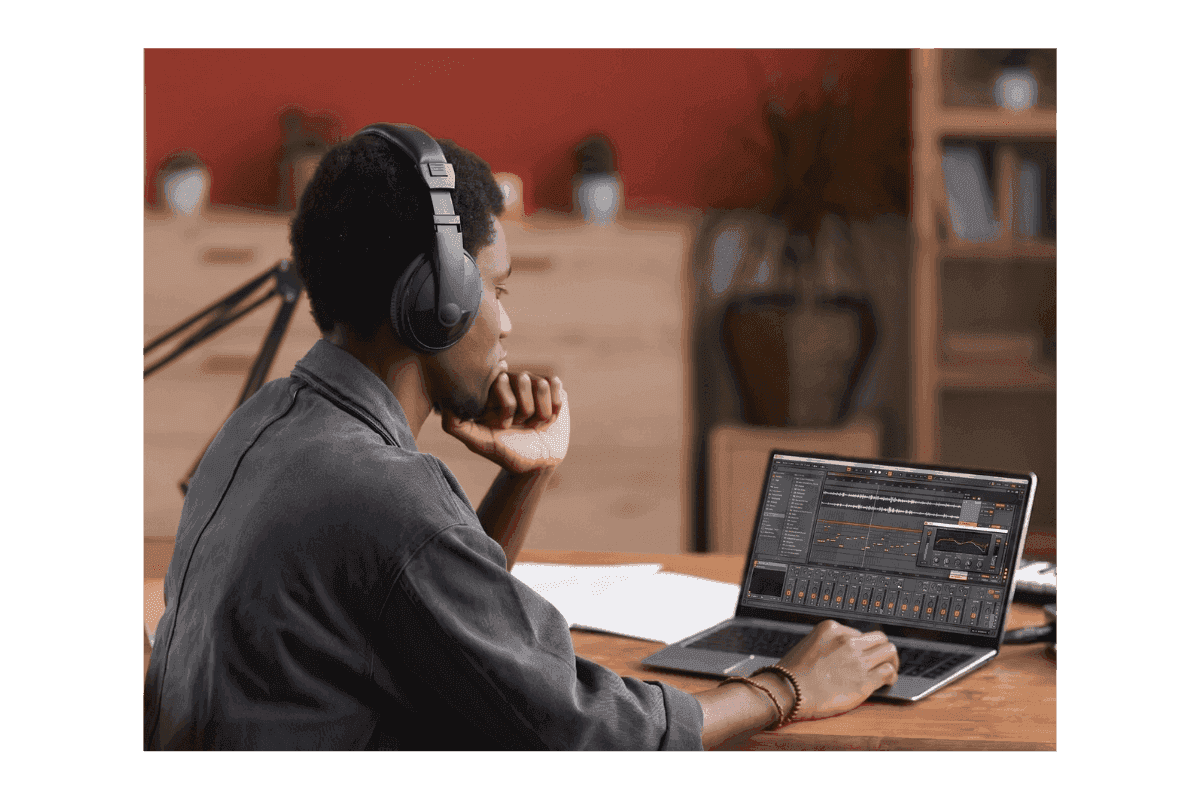
Many beginners assume they need expensive equipment before they can start making music. You don't. For most people, these three essentials are enough:
✓ A Computer
This is where you'll create, record, edit, and arrange your music.
✓ A DAW (Digital Audio Workstation)
A DAW is the software used to produce music. Popular options include:
- FL Studio
- Ableton Live
- Logic Pro
- Reaper
- Studio One
The best DAW is usually the one you learn well and use consistently.Read More to learn about the best free DAWs.
✓ A Pair of Headphones
A decent pair of headphones is enough to start producing and learning the fundamentals.
Helpful Later
As your skills grow, you may decide to add:
- An audio interface
- A MIDI keyboard
- Studio monitors
For now, focus less on gear and more on creating music. A computer, a DAW, and a pair of headphones are all you need to get started.
The Beginner Roadmap to Music Production
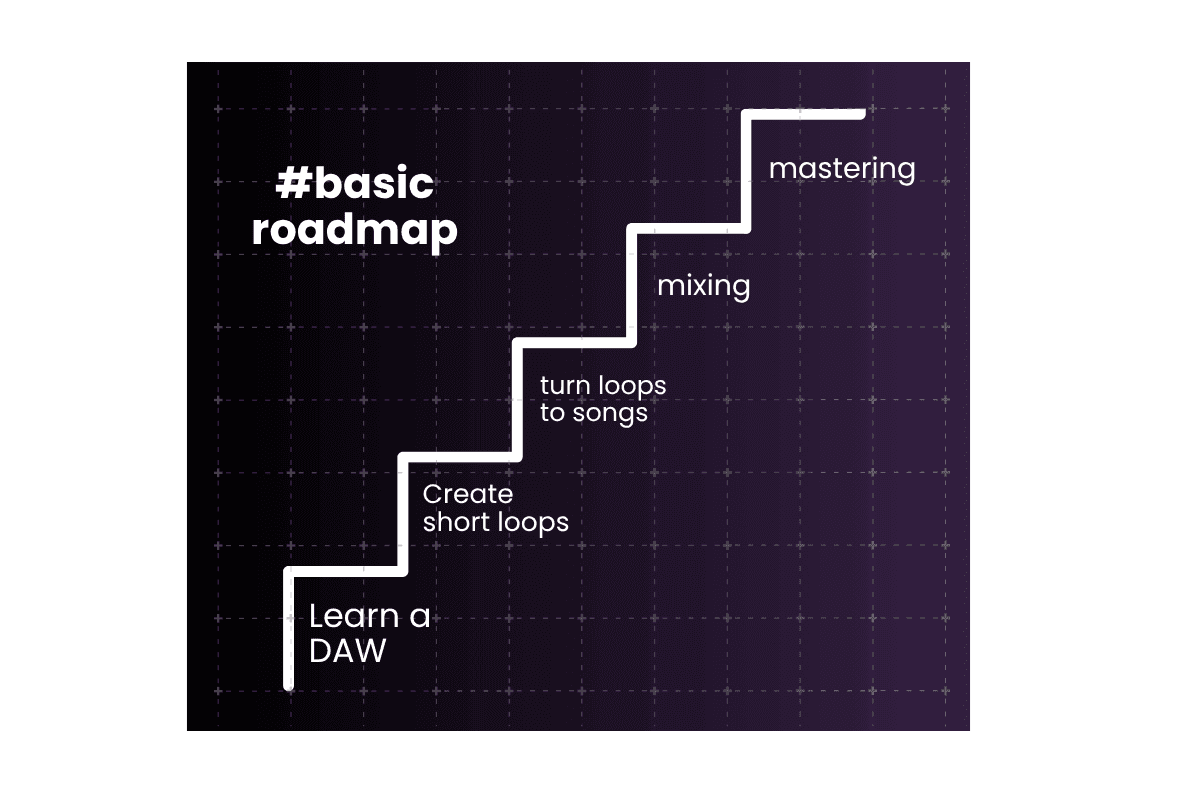
When you're starting out, it's easy to feel like you need to learn everything at once. You don't. The fastest way to improve is to focus on a few core skills and build them one step at a time.
Step 1: Learn One DAW and Stick with It
Every DAW can record, arrange, mix, and export music. That's why constantly switching between software rarely helps beginners. Pick one DAW and learn the basics:
- Creating tracks
- Importing sounds
- Recording audio
- Editing clips
- Exporting projects
At this stage, don't worry about advanced mixing or mastering tools. Focus on becoming comfortable with your workspace.
Step 2: Create Simple Musical Ideas
Many beginners spend weeks watching tutorials before creating anything. A better approach is to start making music immediately. Begin with simple elements:
- A drum pattern
- A chord progression
- A bassline
- A melody
Don't judge the results too harshly. Your goal is to practice creating ideas, not to make a hit song on your first attempt.
Beginner tip: If you're struggling to come up with ideas, tools like Suno and Udio can help generate inspiration for melodies, arrangements, or song concepts. They work best as creative starting points rather than complete replacements for learning production.
Step 3: Turn Loops into Songs
This is where many beginners get stuck. Creating a 10-second loop is relatively easy. Turning that loop into a complete song is a different skill. Start by learning the basic sections found in many songs:
| Section | Purpose |
|---|---|
| Intro | Introduces the song |
| Verse | Develops the musical idea |
| Chorus | Delivers the main hook |
| Bridge | Adds contrast or variation |
| Outro | Brings the song to a close |
A simple song arrangement is often better than a complicated one. Focus on creating clear sections and smooth transitions.
Step 4: Learn Basic Mixing
Once you have a complete song, you can begin making it sound more balanced. As a beginner, mixing doesn't need to be complicated. Start with the fundamentals:
- Adjusting volume levels so the mix doesn’t become cluttered.
- Panning instruments left and right to create space and separation.
- Removing unnecessary frequencies to help the mix sound cleaner.
- Using reference tracks to compare your mix against professionally released music.
One common mistake is spending hours tweaking a song that isn't finished. Always prioritize the arrangement first. A great arrangement can survive a basic mix, but a great mix can't fix a weak song.
Step 5: Mastering your Music
Once your mix is complete, the final step is mastering.
Mastering prepares your song for release and helps it sound more consistent across headphones, speakers, cars, and streaming platforms. It can improve clarity, balance, and overall polish.
Traditionally, mastering required specialized expertise, but modern tools have made the process more accessible. For example, AI-powered mastering services like Remasterify can help beginners create mastered versions of their tracks quickly and easily.
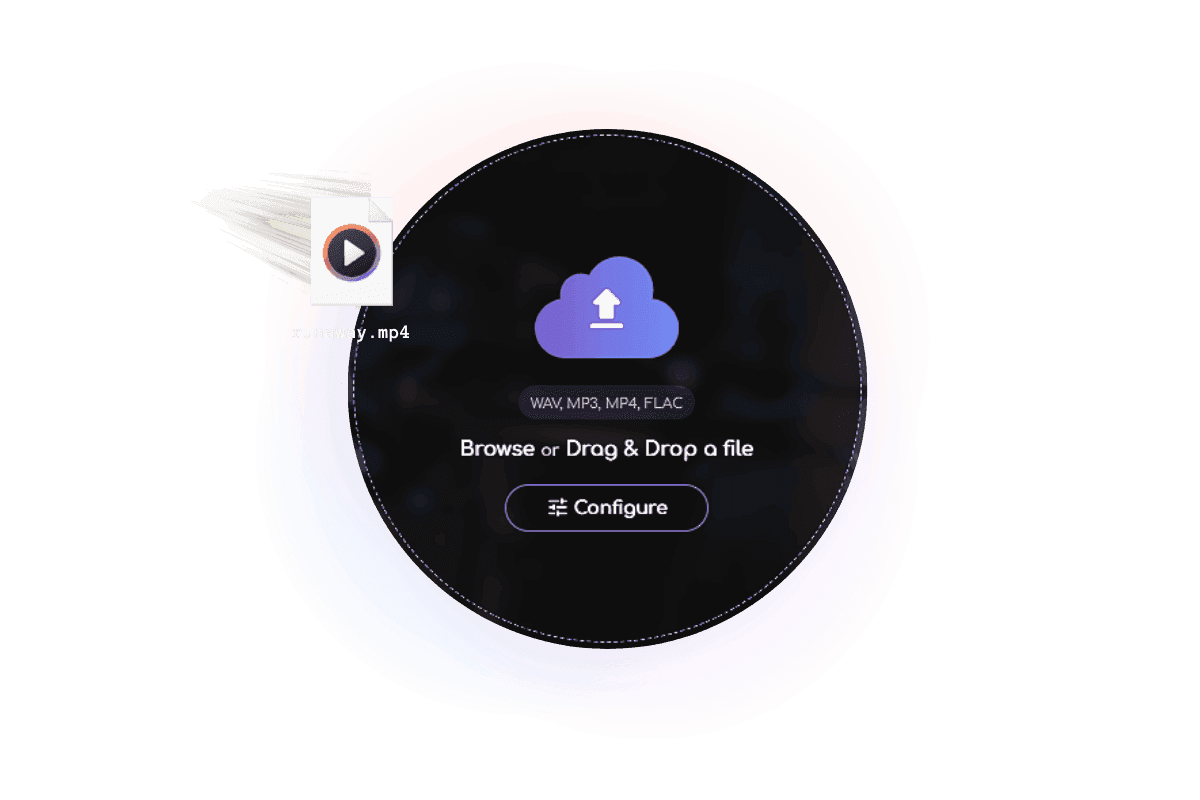
As you gain experience, you can explore mastering in greater depth. For now, the goal is simple: make sure your music sounds its best before sharing it.
Step 6: Finish More Songs
This is the step that separates most successful producers from those who quit. Your first few songs probably won't sound the way you imagine. And that's normal. Every finished song teaches valuable lessons about arrangement, sound selection, mixing, and problem-solving.
Instead of spending months perfecting one track, aim to complete several projects. The experience gained from finishing songs often leads to faster improvement than endlessly revising unfinished ideas.
Remember, the goal isn't perfection. The goal is progress. Every producer you admire started as a beginner and improved one song at a time.
Common Beginner Mistakes
Every music producer makes mistakes when starting out. The key is recognizing them early so they don't slow your progress.
1. Buying Too Many Plugins
It's easy to believe that a new plugin will instantly improve your music. In reality, most DAWs already include the tools needed to create and mix great songs.
Before spending money on additional software, learn the stock plugins that come with your DAW. You'll develop stronger production skills and save yourself a lot of unnecessary expenses.
2. Watching More Tutorials Than You Practice
Tutorials can be helpful, but they shouldn't replace hands-on experience.
A common trap is spending hours watching producers work without opening your own project. Try applying what you learn immediately, even if it's just a simple beat or melody.
The best way to learn music production is by producing music.
3. Never Finishing Songs
Many beginners start dozens of projects but rarely complete them.
Unfinished songs often feel safer because they can't be judged. Finished songs, on the other hand, reveal what you're doing well and where you need to improve.
Every completed track teaches valuable lessons that no tutorial can fully replicate.
Progress in music production doesn't come from collecting ideas. It comes from turning those ideas into finished songs.
How Modern AI Tools Are Simplifying the Process
Artificial intelligence is changing how many producers approach music creation.
Generative AI for Music Creation
Coming up with new ideas is often one of the most challenging parts of music production. Today, generative AI tools allow creators to describe a musical idea using a text prompt and generate music within seconds.
Many producers use these tools to explore melodies, chord progressions, song structures, and creative directions they may not have considered otherwise.
The generated audio can then serve as inspiration, a loop, or a starting point for building a more complete production inside a DAW.
AI-Powered Mastering - Remasterify
AI is also simplifying some of the more technical stages of music production.
Mastering is the final step before releasing a song, but it can be difficult for beginners who are still learning how professional mixes and masters are created.
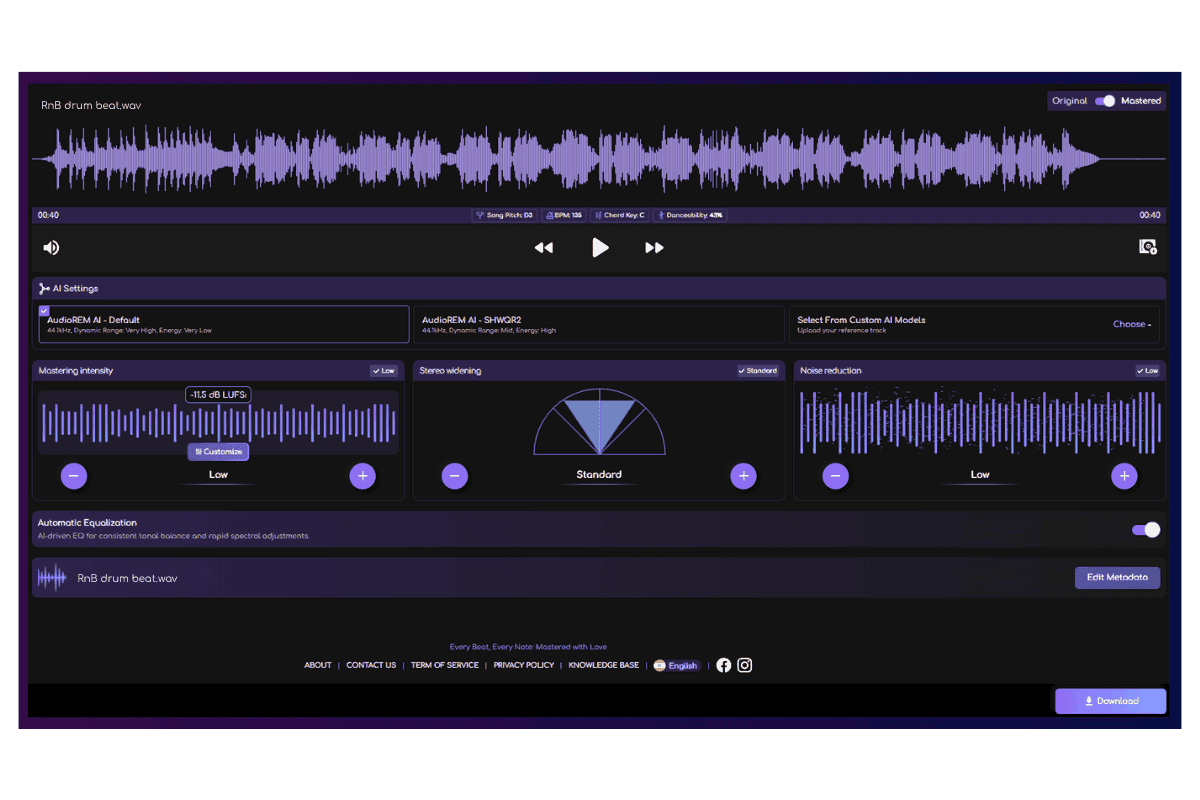
Remasterify makes this process easier by automatically detecting the characteristics of your song and building a custom mastering chain around it. That means your track gets the kind of treatment it actually needs instead of a one-size-fits-all approach.
If you want more control, Remasterify also gives you settings you can adjust to shape the final sound in your own way.
For beginners and independent artists, this makes mastering feel a lot more approachable without taking away creative control.
Final Thoughts
Music production is a skill that develops over time. You don't need expensive gear or years of experience to get started.
Focus on learning the fundamentals, finishing songs, and improving with each project. Modern tools can help streamline parts of the process, but consistent practice remains the key to becoming a better producer.
Start creating, keep learning, and enjoy the journey.
Frequently Asked Questions
What does music production do?
Music production turns a musical idea into a finished song. It involves songwriting, arranging, recording, mixing, and mastering so the track is ready for listeners.
Is music production very hard?
Music production has a learning curve, but beginners do not need to master everything at once. With consistent practice and the right tools, anyone can learn the fundamentals over time.
Is 20 too late to start producing?
Not at all. Many successful producers started in their 20s or later. What matters most is consistent practice, not the age at which you begin.
Do I need music theory to produce music?
No. Many producers start creating music before learning formal music theory. While theory can help you understand melodies, chords, and song structure, it isn't required to begin producing music.
What is the best DAW for beginners?
There is no single best DAW for everyone. Popular beginner-friendly options include FL Studio, Ableton Live, Logic Pro, and Reaper. The most important thing is choosing one and learning it consistently.
How long does it take to learn music production?
Most beginners can learn the basics within a few months. Becoming highly skilled takes longer, but regular practice and finishing songs will help you improve much faster.