
The loudness war is over. The real challenge now is staying loud without losing impact.
How to Make Your Music Louder Without Crushing the Punch
Think of your track like a photo straight off the camera. You nailed the shot. Great composition. Perfect timing. But you uploaded it unedited; no sharpening, no color correction, no crop. Next to a polished, edited image, it looks flat. That's your unmastered mix on Spotify.
You spent hours on that drop. The kick hits right. The synths cut through. The bass sits deep. Then it goes live — and it sounds quiet and small next to everything else on the playlist.
That's often not only a mixing problem. That's a mastering problem.
The Trade-Off Most Producers Miss
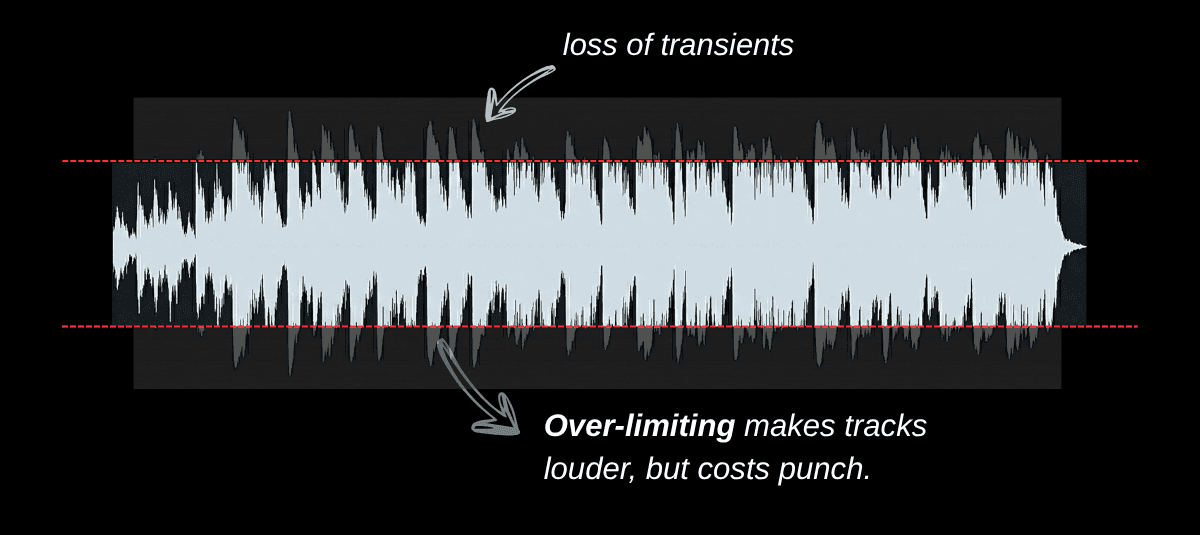
According to research published by the Audio Engineering Society (AES), as limiting becomes more aggressive, it can begin to affect how your track is perceived — especially in terms of punch and clarity.
There’s a specific point where loudness and punch start working against each other. Push your limiter too hard, and it starts cutting into the transient peaks. That leads to a loss of punch in your track. The track gets louder in raw level, but it stops hitting.
That damage isn’t recoverable after the fact. Getting loud without crushing punch means making the right decisions at the mastering stage — before it’s too late.
How Streaming Platforms Judge Your Track
Every major platform — Spotify, Apple Music, Soundcloud — uses a process called loudness normalization. It's automatic. It measures your track and adjusts the volume before any listener ever hears it.
According to MeterPlugs, only 17% of Spotify users change the default normalization setting, meaning most listeners likely hear normalized playback.
Spotify normalizes to -14 LUFS — but that’s the playback target, not necessarily your mastering target. For example, in EDM, most professional masters sit between -7 and -9 LUFS. That heavier limiting bakes in the density and crunch the genre demands — and that character survives normalization. A proper master knows which target is right for your genre, not just which number the platform prints.
Where the Impact Gets Lost
If your track is pushed too loud — say -8 LUFS — Spotify will simply turn it down at playback to around its target. That means you keep the damage from over-limiting, without keeping the loudness advantage you were chasing.
If your track is too quiet — left at a raw export around -22 LUFS — normalization will raise its volume, but it can’t add what was never there: the density, tonal balance, and transient control that make a master sound polished. Volume and loudness aren’t the same thing.
Either way, you lose.
What a Proper Master Actually Does
A proper master doesn't just make your track louder. It does three things.
Tonal balance.
The sub-bass (20–60Hz) needs control — or it sounds muddy on phone speakers. The low-mids (200–500Hz) need carving — or it sounds boxy. The high-end needs air, not harshness. A granular EQ fixes all of this.
Dynamic control.
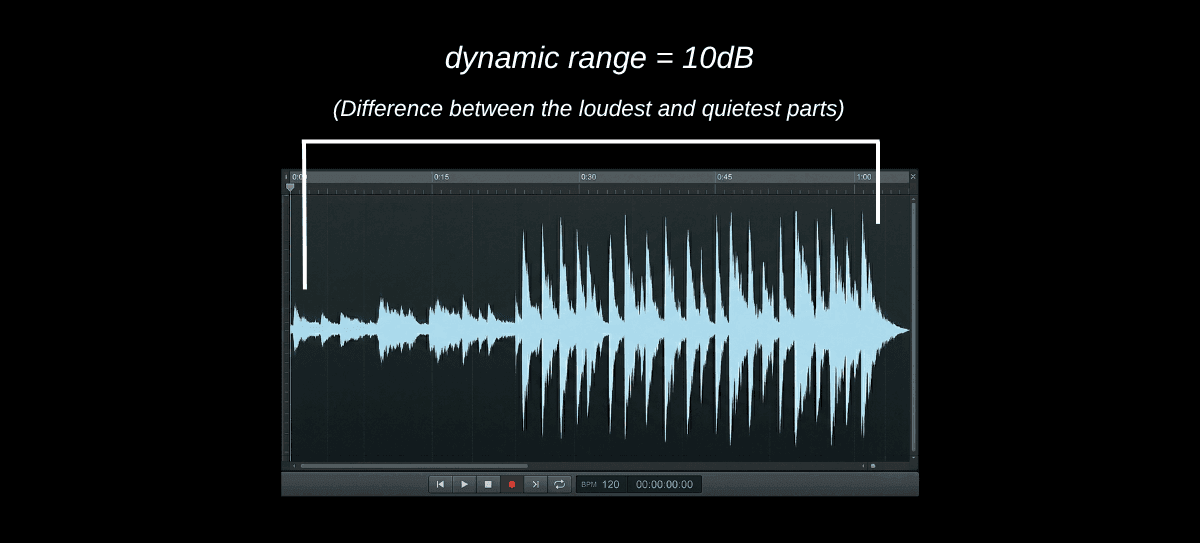
This is the heart of the loudness-without-crushing problem. A limiter adds loudness by capping peaks — but those peaks are your kick’s initial snap, your snare’s crack, your bass drop’s impact. The difference between a master that hits hard and one that sounds flat often comes down to how aggressively that ceiling is applied. Push it too hard and you shave off the transients before listeners even register them. The track reads loud on a meter, but it feels lifeless in the room.
A proper master uses the minimum limiting needed to reach the target LUFS, while keeping enough transient energy intact that the drop still lands with weight. That balance — competitive loudness with preserved dynamics — is exactly what separates a professional master from an over-compressed upload.
LUFS targeting.
Not too hot. Not too quiet. Right in the zone where the platform's normalization works with your track, not against it.
Done right, your track hits harder, translates to every speaker, and sounds like it belongs next to commercial releases. Done wrong — or skipped entirely — it doesn't matter how good the mix is.
How AI Mastering Changed the Equation
Getting your master right for all streaming platforms at once isn't guesswork. It requires analyzing your track against each platform's target — and adjusting EQ, dynamics, and loudness accordingly. That's not something most producers have the time or tools to do manually for every release.
This is exactly where AI mastering stepped in and changed the game.

Remasterify is one of the platforms leading this shift. Upload your mix — WAV, MP3, FLAC, or MP4 (audio extracted from video) — and its multi-model AI engine goes to work. It reads the genre. It corrects the EQ. It manages dynamics. And help creators get closer to a release-ready master for major streaming and content platforms.
The technical specs matter. Remasterify accepts up to 96kHz input, preserving the fidelity of high-sample-rate sessions that cheaper tools discard on ingestion. Outputs come back in HD WAV and MP3 — ready for distribution.
There's also a free tier. No commitment. Just upload a track and hear the difference yourself.
Here’s what other creators are saying:

Brody M.
Music Producer
“ Not gonna lie, mastering was the reason half my mixes never got released. Felt like too much. Remasterify kind of just solved that without me having to learn anything new.. ”

Jenny L.
DJ, Music Producer
“ My tracks were loud, but they weren’t hitting. I’d push the limiter and the kick would just disappear into the mix. Remasterify was the first tool that actually gave me both — the LUFS I needed without the drop losing its punch. ”

Nix Jan
Independent EDM Artist
“ I tried over a dozen online mastering services. None of them got it right. Remasterify removes harshness without killing the top of the mix — that's a rare thing to find. ”